

Makes 1 sandwich ‘brick shaped’ loaf, or sandwich loaf, around 750g of raw mix. Loaf tin is roughly 22 x 11 x 7cm.
This is an easier and faster mostly sour dough loaf, rich in flavour, with good air pockets.
Ingredients:
Levin & instant mash
- 50g starter (sour dough starter, ideally warm and active)
- 95ml tepid water
- 95g strong white bread flour
- 2 Tbs oat milk
- 3/8 cup boiling water
- (this makes 1/2 cup liquid)
- 1 Tbs extra virgin olive oil
- 1/3 cup instant mash (pure potato flakes, no additives)
- 1 tsp salt
Main Dough
- 110ml warm water (around 35 degrees Celsius)
- 1/2 tsp instant yeast
- 1/2 tsp sugar
- 250g strong white flour
Method:
- Add the sour dough starter to a large bowl. Then add the tepid water and flour, and mix well with a silicone spatula.
- In a seperate jug, add the boiling water, milk and oil, then add the instant mash flakes and the salt, and mix well with a fork.
- Let the Levin and mash both stand separately for at least 30 to 90 minutes, at room temperature.
- Then add the instant mash into the main bowl, and stir through to combine well. Leave to stand for around 30-60 minutes while starting the yeast water.
- Make a jug of warm tepid water (up to 35 degrees C), add the yeast and the sugar, and stir well, and then let sit for around 30 to 60 minutes.
- Add the yeast water to the big bowl, and mix
- Then finally add the last 250g of plain flour to the big bowel, and combine thoroughly with a dough hook attachment, for around 3-5 minutes (or mix and kneed by hand)
- Place the slightly stringy dough into a large plastic containers (at least twice as large as the mix going in).
- Let rise until around twice the volume, and the transfer to the lined loaf tin and let it rise again for 2-5 hours until it has expanded to lightly press on the lid (if you try to gently lift the lid, you’ll feel the dough has stuck to it. Ideally don’t let it rise for so long that it pushes the lid up much.
Baking:
- Place the loaf tin into a pre-heated oven, at 220 degrees C, for 30 minutes. Then remove tin from the oven, remove the partially baked loaf from the hot pan, carefully peel away the baking parchment as applicable (it should be good for multiple reuses).
- Then place the naked loaf back into a 210 degrees C oven for a further 15 minutes.
- Remove from the oven, place on a cooling rack, and allow to cool for at least 60 minutes (it will be continuing to cook inside the crust during this time, so don’t cut into it too soon).
- When ready, slice and top accordingly. Store the remaining bread in an airtight container for up to about 5 days.
Notes:
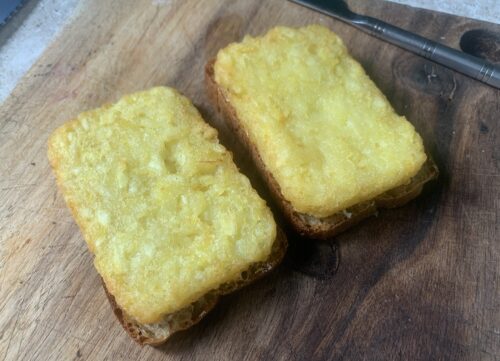
- An update from this sour dough recipe.
- Also great for an updated avocado on sour dough.
- I made a lightweight lid for my steel loaf tin, out of 1.2mm Aluminium sheet, and just folded three sides to match the tin, but silver foil should also work although not as well in developing the crust.
- The cheat of an additional instant yeast to the warm water, makes the whole process faster, and if your room temperature is warm enough, you can bake late on the same day if you start it first thing that morning.
- It is often better to let the sour dough flavours develop more over a couple of days in the fridge, or at room temperature in the winter.
- You can also freeze the un-proven loaf, defrost it in the fridge overnight or longer, and then carry on as normal as below, on the day of baking. The yeast cultures however may take a while to wake up again.
- When baking within a loaf tin with a suitable metal lid, it makes an airy ‘brick’ shape loaf with a good crust on all sides, rather than the domed top of a regular store brought loaf.
If refridgerating the mix mid-way through making.
- After the final mix, you may be able to place the plastic container in your fridge for a couple of days until ready to bake.
- Bring out the plastic container of dough out of the fridge first thing in the morning, and allow to continue to rest at room temperature, until it’s roughly doubled from the very original size. Then transfer to the loaf tin and let it rise again
Leave a Reply